
Tilapia Farming

How to Set Up and Operate a Tilapia Farm in Liberia
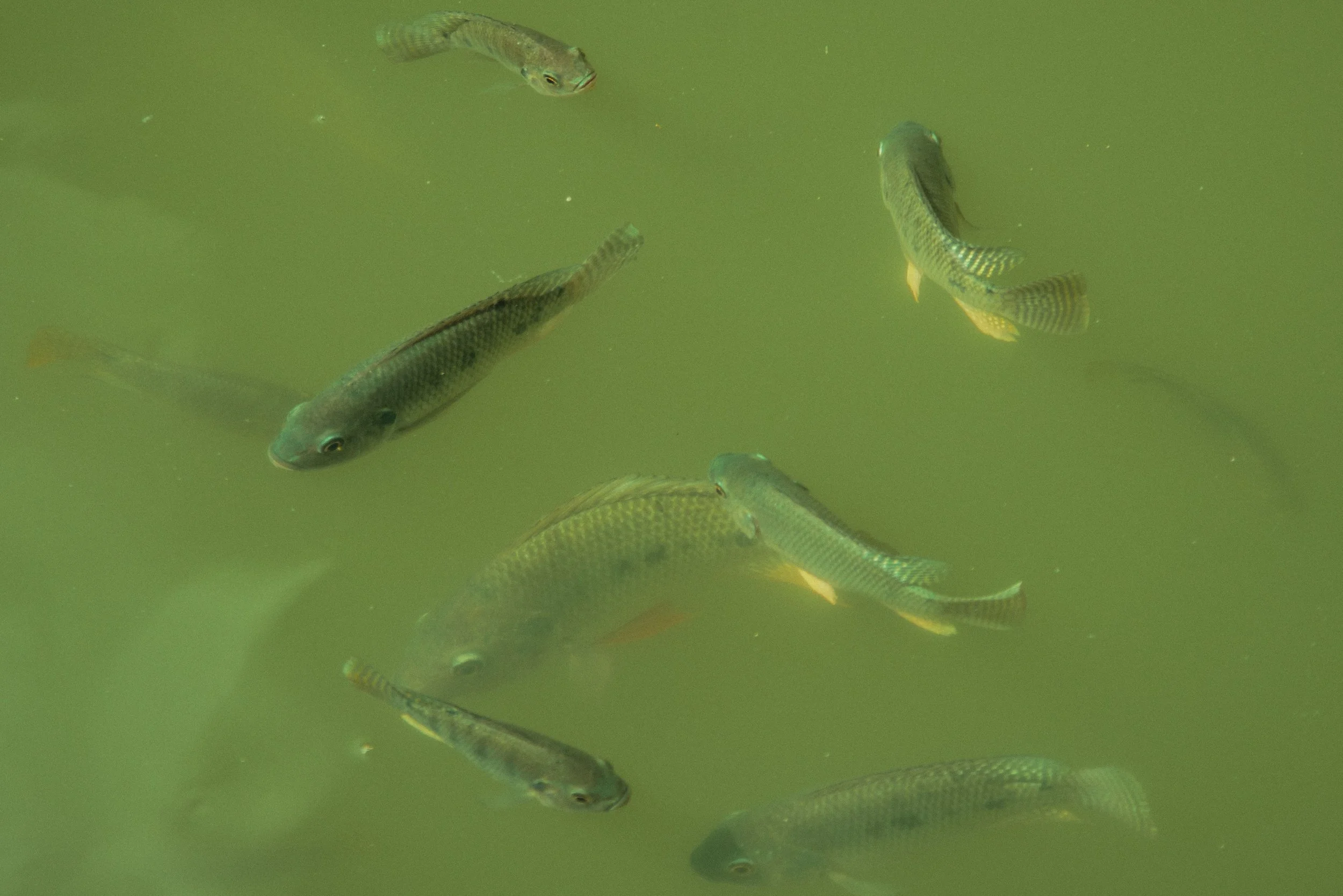
Tilapia is a hardy, fast-growing, high production fish that can be raised in ponds throughout Liberia. It is also one of the most important animal protein sources in the Liberian diet, helping families and communities improve nutrition and food security. With proper pond construction, reliable fingerling supply, good feeding practices, and careful harvesting, a tilapia farm can provide steady food and income. This guide explains how to lay out ponds, source fingerlings, feed the fish, and harvest them efficiently under typical Liberian condition.

Farm and Pond Layout
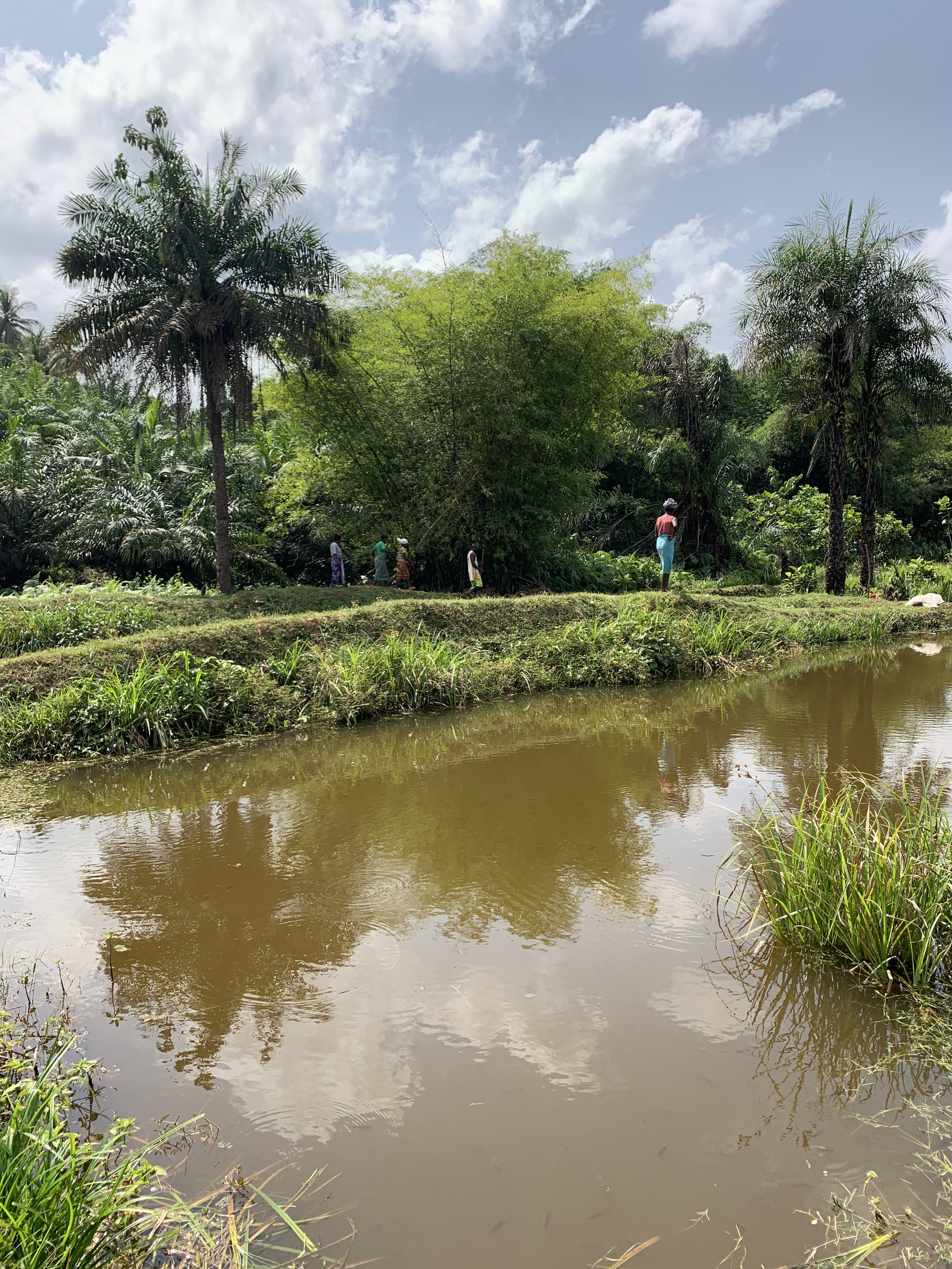
A tilapia farm is usually made up of multiple earthen ponds laid out around a dependable water source, most often a creek. Ponds can be different shapes and sizes, but for illustration we will assume ponds that are about 40 feet by 40 feet and 4 feet deep.
The ponds are separated by raised mounds of earth, built using simple tools such as shovels and wheelbarrows. This method is already common and practical in Liberia. When planning the site, it is often effective to locate the ponds in or near a swampy area, as long as there is reliable access to flowing water. The creek can run alongside the ponds or be diverted to flow between them.
For this description, assume a branch of the creek runs down the middle of a line of ponds. Each pond needs a controlled way for water to come in and a controlled way for water to go out, either into the next pond or, more commonly, back into the creek. Six- to eight-inch pipes work well for both inlet and outlet.
Water flow should be controllable. The best option is a proper valve built into the pipe, but in lowresource settings simple methods can be effective. For example, plastic sheeting secured with strong rubber bands can be used to block or open flow as needed.
The first ponds in the series should sit at a slightly higher elevation than the later ponds so that water can move by gravity from pond to pond and finally return to the creek. The creek should have some slope as it flows past the ponds, so that water will flow by gravity from the last pond back into the creek. Each pond should be level so the 4 foot depth is maintained across the whole pond. Good planning of levels and water paths at the beginning will make daily management and eventual harvesting much easier.

Feeding the Fish
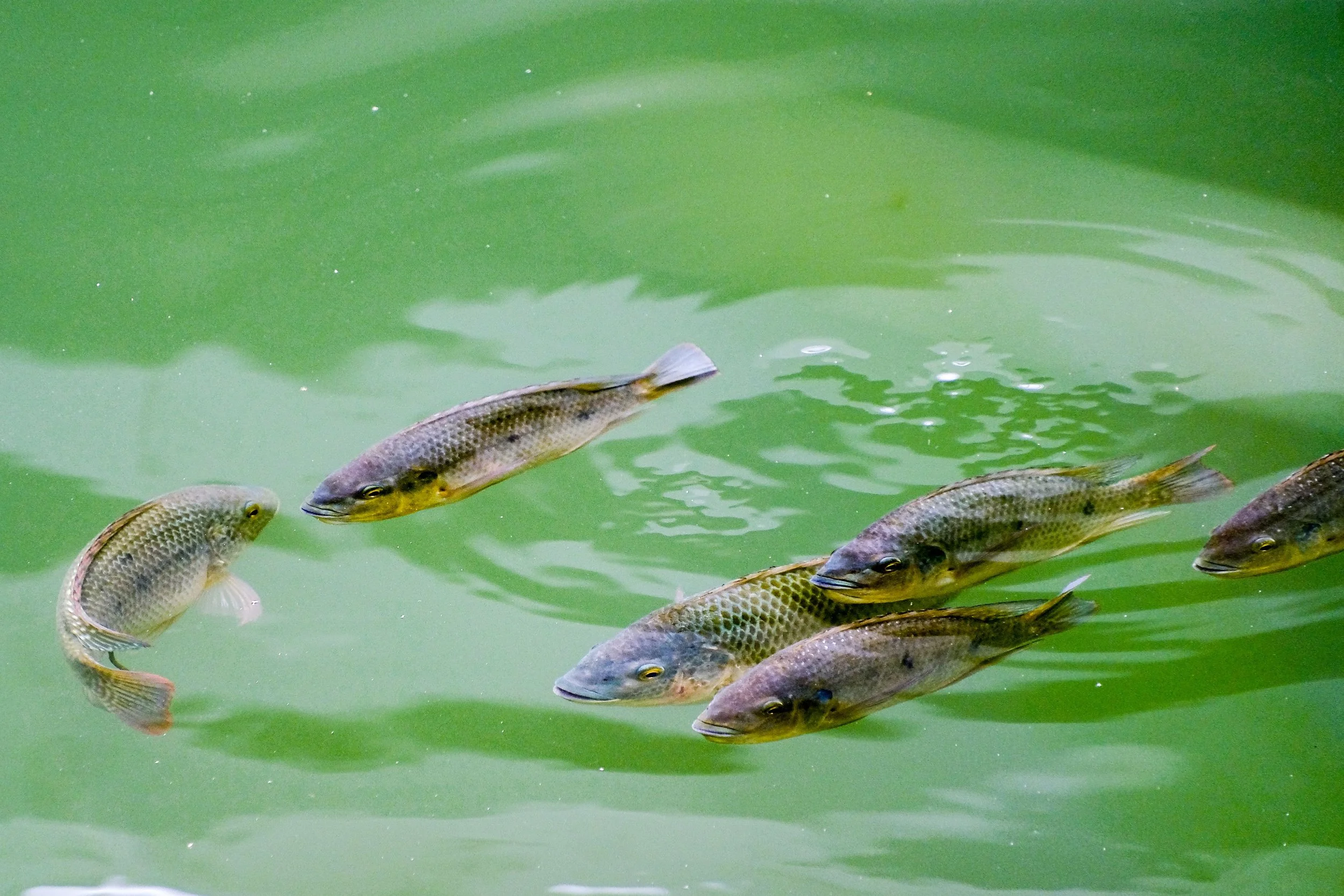
Once the pond is established and stocked with fingerlings, feeding becomes the single most important factor in growth and production. Many farmers rely on rice bran or wheat bran because they are inexpensive and widely available. However, bran alone does not provide all of the nutrients tilapia need, especially protein. Without adequate protein, fish growth is slow. When high protein feeds are available and used correctly, tilapia can typically reach harvest size in about six months. With low protein feeds such as bran alone, it may take closer to a year.
Because of this, farmers are encouraged to supplement basic bran feeds with additional protein sources. There are several practical options suited to Liberian conditions.
Algae and Maggot-Based Protein
Algae naturally grows in ponds and is a good protein source that tilapia readily consume. A simple method to enhance protein in the pond uses manure and maggots:
1. Purchase or collect manure from any available livestock source.
2. Bury the manure for about four days to allow maggots to develop.
3. After maggots have formed, throw the manure containing the maggots into the ponds.
The fish will eat the maggots as a rich protein source, and the manure itself provides nutrients that support the growth of algae. Over time, this helps create a protein rich natural food environment within the pond.
Duckweed
Duckweed is a small aquatic plant that grows rapidly in water and is naturally high in protein. It is being used and tested as an additional protein source. If you contact the Agriculture and You offices in Bong County at CARI, duckweed may be available to help you start a duckweed pond. It is important that duckweed be grown in a pond separate from the fish. If it is planted directly in the tilapia pond, the fish will quickly eat all of it and none will be left to reproduce. Instead, cultivate duckweed in a separate pond and periodically harvest it and throw it into the tilapia ponds as a supplemental feed.
Formulated High-Protein Feeds
Another effective strategy is to create a feed mixture that combines bran with locally available proteinrich ingredients. Some good options for protein additions include:
Soybeans, which are excellent if they can be grown and incorporated into feeds.
Ground fish remains (“boney”) left after fish are cleaned and eaten.
Animal blood, which may be obtained from slaughterhouses.
These can be mixed with rice or wheat bran and processed into a form that tilapia can easily consume. A pelletizer is ideal for making uniform pellets, but is often too expensive. A simple grinder can break the mixture down sufficiently for the fish to eat it. Any safe protein source that is available locally can be considered for inclusion in the feed. Farmers are encouraged to be resourceful and make use of what is at hand, while ensuring materials are not contaminated and are appropriate for animal feed.
Managing Algae and Oxygen Levels
While algae is helpful as a protein source, too much algae can create serious problems. Dense algae growth can consume a large amount of oxygen, especially during late night and early morning hours on hot days. At these times, oxygen levels in the water often drop to their lowest point. Low oxygen causes stress, slow growth, and can lead to fish deaths. Ideally, a dissolved oxygen (DO) meter is used to monitor oxygen levels in the pond. DO readings above about 5 mg/L are generally good, readings around 4 mg/L are marginal, and readings near or below 3 mg/L are definitely problematic and dangerous.
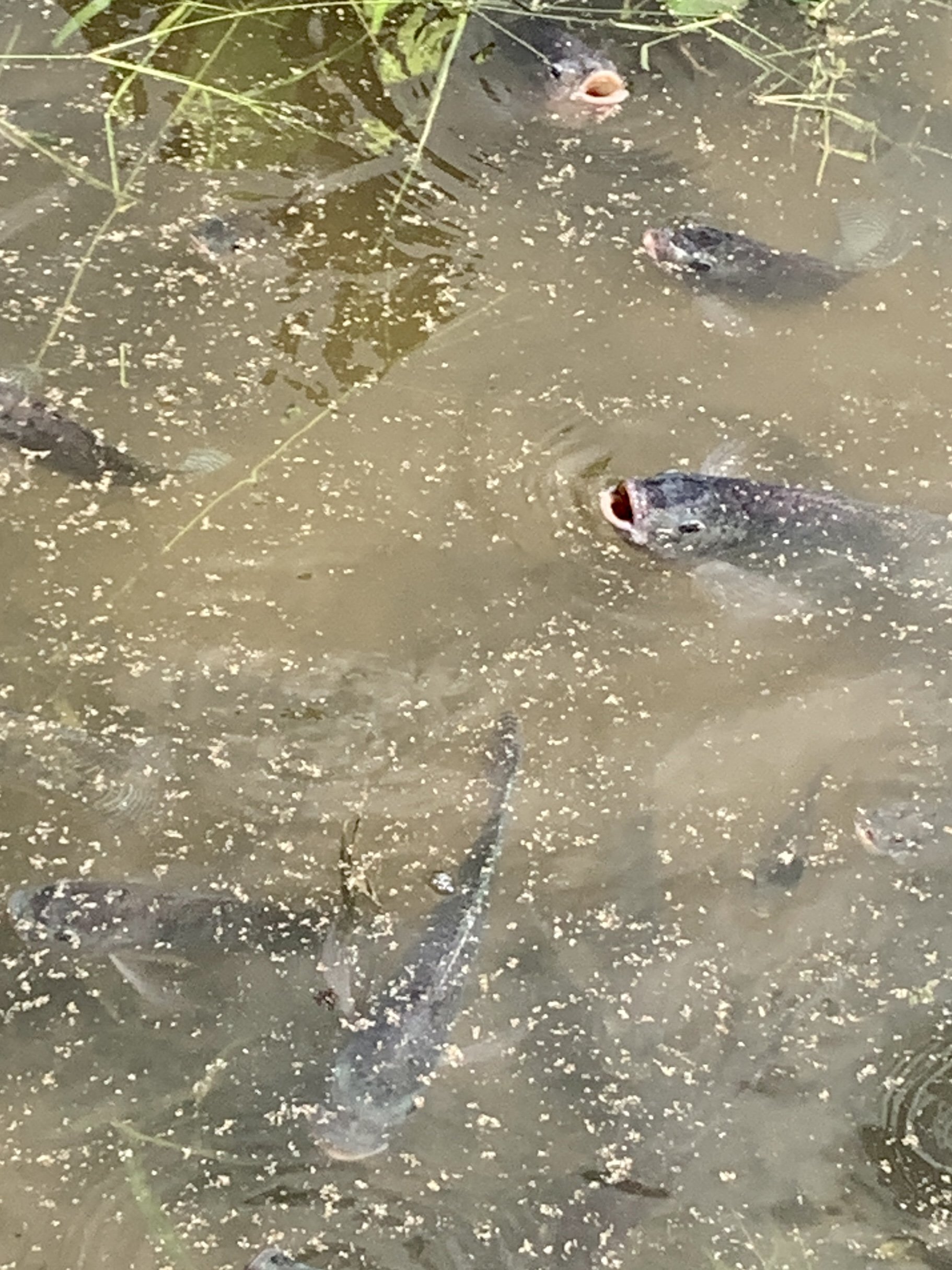
In practice, most farms in Liberia will not have access to a dissolved oxygen meter. In these cases, the behavior of the fish becomes the main indicator of oxygen status. If fish are rising to the surface and gasping for air, especially at night or early in the morning, it is a strong sign that oxygen levels are too low. Any sudden or unexplained deaths are also a warning that water quality and oxygen need attention.
The simplest response to suspected low oxygen levels is to partially drain and refill the pond with fresh water, which will contain more dissolved oxygen. Another method is to physically aerate the water, for example by splashing or creating a simple fountain to mix air into the water. These approaches can be technically more challenging, so in many cases water replacement is the most practical solution, even though some algae and nutrients are lost when water is removed.
Planning for Harvest and Using Seine Nets
Harvesting should be considered from the very beginning, when the ponds are being laid out. At some point, the fish will reach market size and will need to be collected
efficiently.
Two main methods are used:
A net or mesh laid across the bottom of the pond during construction that can later be raised to bring the fish together.
Seine nets that are pulled through the pond to corral the fish.
A seine net is a long fishing net with floats along the top edge and weights along the bottom edge. The floats keep the top of the net at the water surface, while the weights pull the bottom down to the pond floor. To use it, fish farmers stretch the net across the pond and then slowly pull it through the water, sweeping the fish into one end of the pond where they can be collected.
Whichever method is chosen, the pond should be built and shaped in a way that allows nets to be moved through it without major obstacles. At harvest time, most of the pond water is typically drained out so that the water level drops significantly. This makes it much easier to gather the fish and reduces stress on both fish and workers.
Tilapia farming in Liberia can be very productive using simple, locally available tools and materials. Because tilapia is such an important source of affordable animal protein in the Liberian diet, successful farms contribute directly to better health and stronger communities. Success depends on careful planning of pond layout and water control, use of high quality fingerlings, thoughtful feeding strategies that provide adequate protein, and close attention to algae and oxygen levels, especially during hot weather. With these elements in place, farmers can reliably grow tilapia to market size an strengthen food security in their communities.